What Power, Secrecy, and My Own Life Taught Me About Truth
What Power, Secrecy, and My Own Life Taught Me About Truth
There was a time in my life when I believed authority meant safety.
I believed that the people at the top—the leaders, the professionals, the ones with titles, money, and influence—had earned their position because they were trustworthy. That the systems around us existed to protect truth. That integrity was built into leadership.
I believed this not because I had verified it, but because my brain needed it to be true.
Familiarity creates comfort.
And comfort creates assumptions.
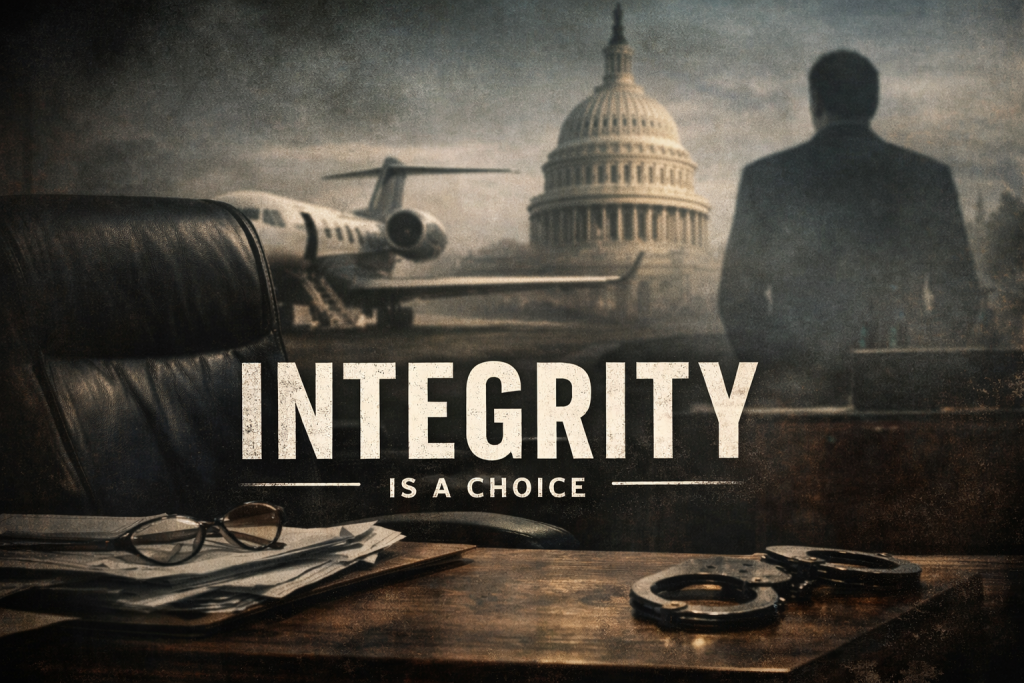
But over time, both through my own life and through watching the world around me, I came face-to-face with something much more uncomfortable:
Position does not create integrity.
It exposes it.
What Integrity is not
The public exposure of Jeffrey Epstein and the documented associations he maintained across business, politics, and entertainment did not just reveal the actions of one man. It revealed something far more unsettling. It showed that proximity to power does not guarantee moral clarity. It showed that systems we assume are built to protect truth are often built to protect stability.
And stability and truth are not always the same thing.
This realization forced me to confront something even more personal.
Because before I could question the integrity of institutions, I had to confront the lack of integrity within myself.
There were periods in my life where I lived reactively, where my decisions were driven by impulse, pain, ego, and survival, where I justified choices not because they were right, but because they were familiar. Because they protected an identity I was trying to preserve.
From the outside, people see change as a decision.
From the inside, change is an exposure.
It is the moment you stop explaining your behavior and start seeing it clearly.
And that clarity is not comfortable.
It strips away the story you told yourself about who you were. It removes the illusion that circumstances were responsible for your decisions. It forces you to confront the truth that integrity is not something you inherit. It is something you choose.
Over and over again.
The Epstein case, regardless of individual legal outcomes, revealed something that extends far beyond any single person. It revealed how easily humans equate status with trustworthiness. How quickly we assume that if someone has access, wealth, or influence, they must have earned it through character.
But character is not verified by proximity to power.
It is verified by behavior when no one is watching.
Integrity is not a public performance.
It is a private pattern.
What I have learned through rebuilding my own life is that systems, governments, or corporations do not control integrity. It is controlled by. Systems can incentivize behavior. They can discourage behavior. They can hide behavior. But they cannot create integrity inside a person.
That decision belongs to the individual alone.
And this is where emotional regulation becomes inseparable from truth.
Because without regulation, humans do not choose integrity. They choose safety. They choose familiarity. They choose what protects their identity, their position, or their comfort.
Regulation creates space.
Space allows awareness.
Awareness makes choice possible.
And choice is where integrity lives.
This is the RAC (Regulation → Awareness → Choice) sequence — the same one underneath ORS™ (Operational Regulation Systems). Integrity is not a separate topic from regulation. It is what regulation makes possible.
The greatest threat to integrity is not power.
It is unconsciousness.
It is operating on patterns that were never questioned.
It is assumed that systems will protect the truth, so individuals do not have to.
But history—and life—have shown me something different.
Integrity is not enforced from the outside.
It is built from the inside.
I do not write this from a place of moral superiority.
I write this from experience.
I know what it is like to live without alignment between who you are and how you behave. I know what it is like to justify decisions that did not reflect the person I wanted to be. And I know what it takes to confront that reality and rebuild, one decision at a time.
Integrity is not proven when it is easy.
It is proven when there is an opportunity to violate it.
It is proven when no one would know.
It is proven that the system would protect you if you stayed silent.
And ultimately, integrity is not something we demand from others.
It is something we demand from ourselves.
Because systems do not create truth.
People do.
And the future will not be shaped by positions of power.
It will be shaped by individuals who choose alignment. The choice between what they know is right and what they are willing to do.
Even when it costs them.
Especially when it costs them. Integrity is not something granted by position, authority, or recognition. Integrity is built through our daily choices, yes, choices that impact others, but more importantly, choices that shape how we see ourselves. This principle of integrity is central to my work in emotional regulation and human performance.
Frequently Asked Questions
What does it mean that integrity is a decision, not a position?
It means integrity isn’t granted by a title, a role, or proximity to power — it’s something a person chooses, repeatedly, especially when no one is watching and there’s no cost to abandoning it.
Why doesn’t power or status guarantee good character?
Because systems can protect stability without protecting truth. Access, wealth, and influence reflect what someone has accumulated, not what they’ve chosen to do when accountability isn’t enforced from the outside.
How does emotional regulation relate to integrity?
Without regulation, people default to protecting safety, familiarity, or identity rather than choosing what’s right. Regulation creates the space for awareness, and awareness is what makes an actual choice — including the choice to act with integrity — possible in the first place.
Can integrity be rebuilt after a period of reactive, impulsive decisions?
Yes. Integrity isn’t inherited or fixed — it’s built through daily choices. Rebuilding it starts with confronting behavior clearly rather than explaining it away, then choosing alignment one decision at a time.
Leave a Reply