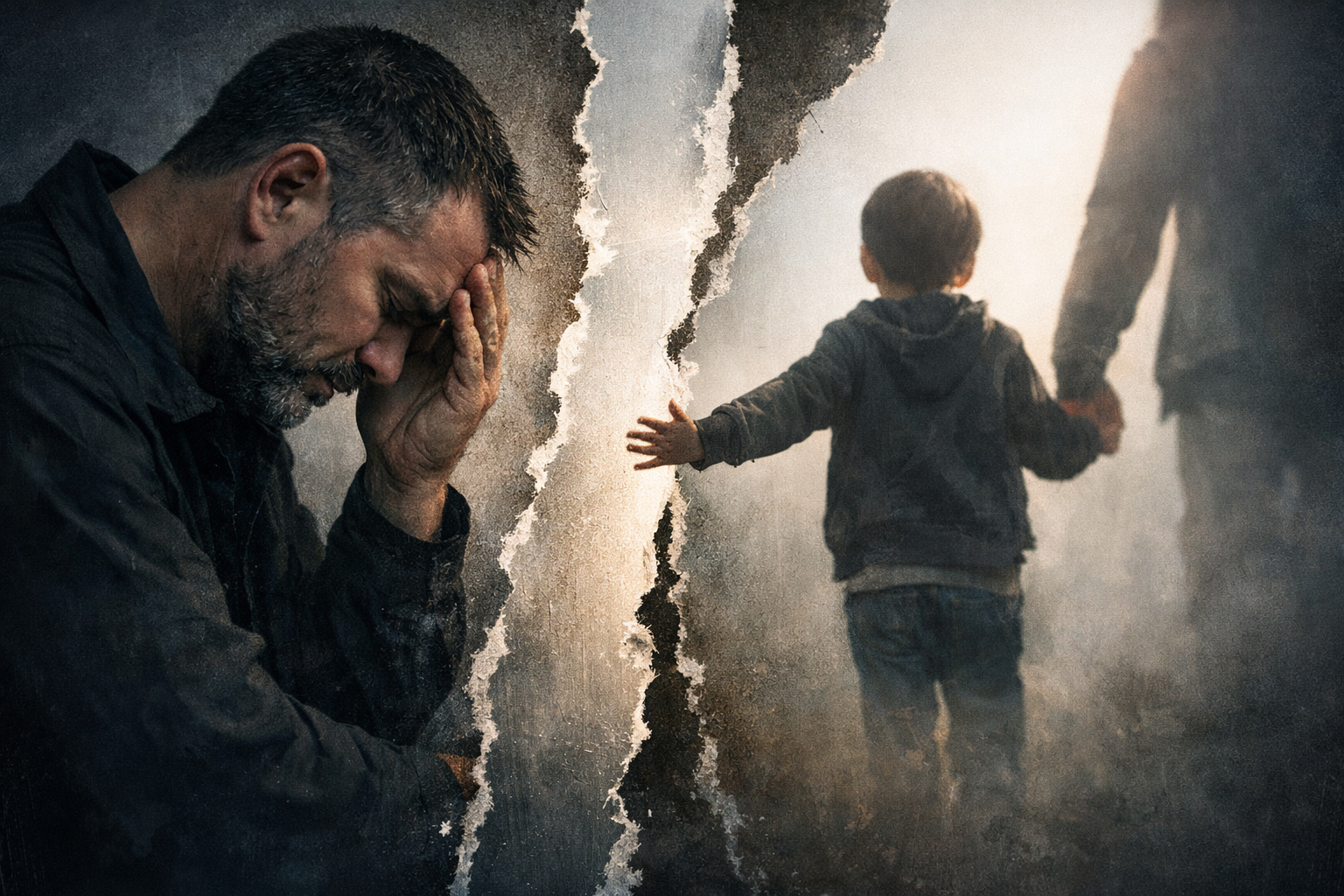
This experience shaped how I showed up in relationships and emotional regulation, influencing how I reacted to uncertainty and connection.
There was a moment in my life that changed how I showed up in every relationship that came after.
I lost someone I loved deeply.
Not through death—but through separation without closure.
One day, I was “Dad.”
Next, I was handed a note.
“I love you, but I can’t talk to you until the appropriate time.”
That moment didn’t just hurt.
It changed how I operated in relationships.
How Relationships and Emotional Regulation Are Connected
What I carried forward didn’t look like grief.
It looked like control.
It looked like defensiveness.
It looked like reacting quickly to uncertainty.
I became more sensitive to anything that felt like loss.
More aware of shifts in behavior. More likely to protect myself before anything can be taken again.
I was less focused on my relationships and emotional regulation, more on protection.
Why Emotional Reactions Aren’t Just About the Present
I thought I was reacting to what was in front of me.
But I wasn’t.
I was responding to something that never got resolved.
That’s how it shows up in relationships:
- Trying to control outcomes instead of staying present
- Reacting quickly to protect yourself
- Struggling to relax into connection
- Interpreting uncertainty as a threat
Not because you’re broken.
Because your system adapted.
Why You Can’t Think Your Way Into Emotional Regulation
You don’t solve that by thinking differently.
Because it’s not a thinking problem.
If your emotional baseline is unstable, your relationships will be too.
Not because you don’t care.
But because your system is trying to protect you from something it never fully processed.
When something isn’t processed, your system protects first.
Regulation → Awareness → Choice
You then get to determine what happens next.
Changing Relationships and Emotional Regulation
That realization forced a shift.
Not in what happened.
But I was still carrying it.
I had to separate:
What’s happening now, from what I’ve been carrying forward
Emotional intelligence isn’t about being calm all the time.
It’s about recognizing when your reaction is coming from somewhere deeper than the present moment.
And choosing to respond from who you are now—not what you went through then.
Connection is key, and many of us are missing the mark. Read this article about connection.
Real-Time Indicators of Unprocessed Loss
Unprocessed loss doesn’t just live in memory.
It shows up in real time—often without you realizing it.You may notice:
- Tension in your body when you think about a past event
- A surge of anger or defensiveness tied to something that feels familiar
- An urge to prove yourself or show how well you’re doing
- Difficulty staying present when something feels uncertain
- A need to control outcomes to avoid feeling that loss again
These aren’t random reactions.
They are indicators that your system is still responding to something unresolved.The moment you can recognize it happening in real time… is the moment you can choose to regulate and then begin to respond differently.
— Matthew F. Stevens
If you want to understand your current baseline and how it’s affecting your decisions and relationships:
👉 Start here:
https://nals.io/
Leave a Reply