Tag: company culture
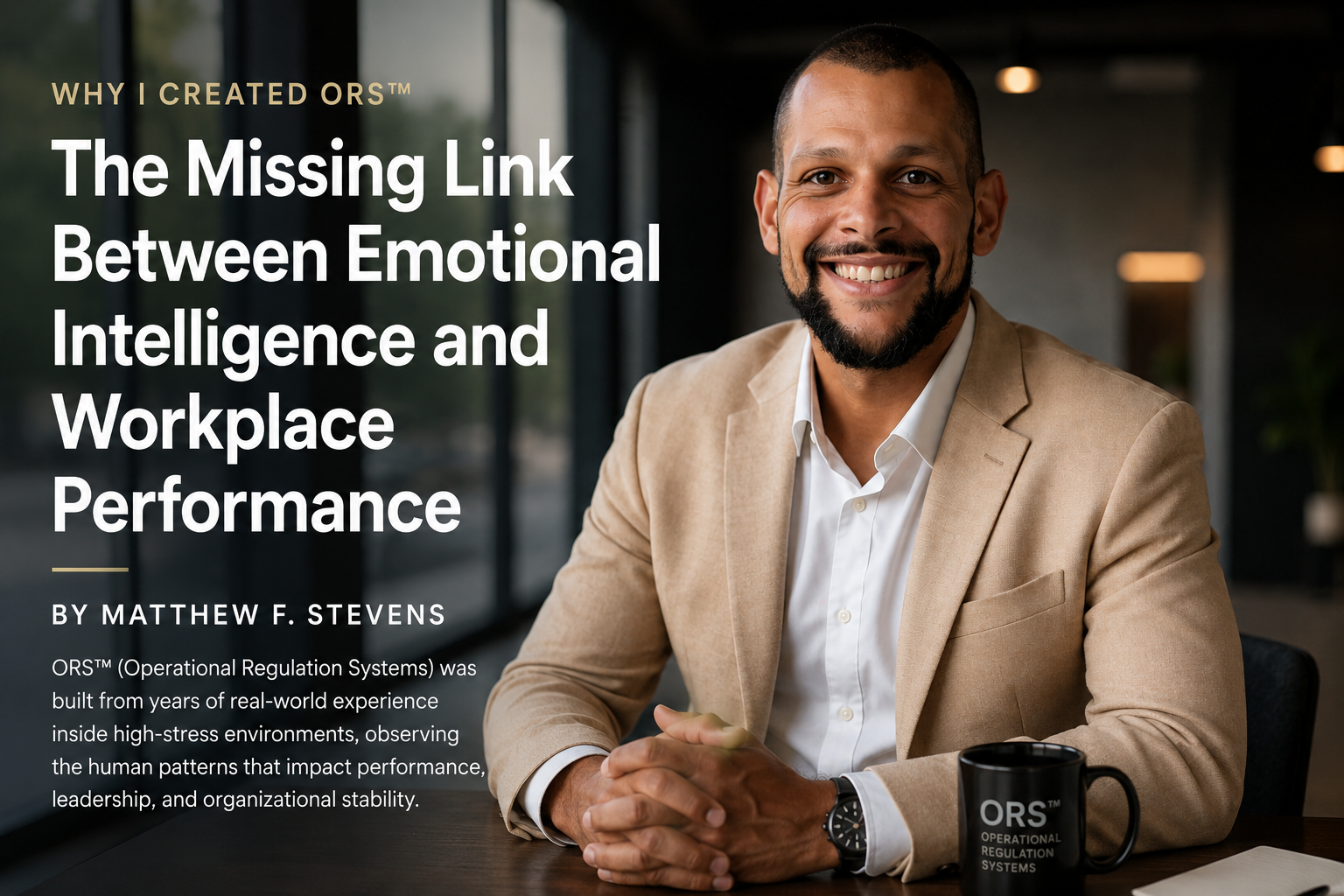
  • Emotional Intelligence Is the Missing Variable Behind Workplace Performance

    Emotional Intelligence Is the Missing Variable Behind Workplace Performance

    For years, I watched organizations focus on productivity, compliance, engagement, and performance while overlooking one of the most important drivers of human behavior:

    Emotional intelligence.

    Not emotional intelligence as a buzzword.
    Not motivational posters or corporate slogans.

    Real emotional intelligence.

    The ability to regulate emotions, recover under pressure, communicate effectively, maintain self-awareness, and make sound decisions during stress.

    Research and leadership literature from sources like Harvard Business Review has increasingly highlighted the role emotional intelligence plays in leadership, communication, and organizational performance.

    What I eventually realized was this:

    Most performance problems are not intelligence problems.

    They are emotional intelligence problems.

    That realization became the foundation for ORS™ (Operational Regulation Systems).

    I did not develop ORS™ from theory alone. I developed it through years of firsthand experience across multiple industries and high-stress environments.

    For most of my adult life, I worked helping children and families in emotionally intense situations. Over time, I witnessed the direct relationship between emotional regulation and human behavior.

    Children struggling with emotional regulation often displayed:

    • impulsive behavior
    • emotional reactivity
    • poor decision-making
    • instability under stress

    But the deeper insight came later.

    I began noticing many adults — including leadership teams, employees, and professionals — were struggling with the exact same underlying issues.

    Different age.
    Different environment.
    Same human mechanism.

    Over the years, I worked across multiple industries including:

    • youth services
    • residential treatment
    • manufacturing
    • customer service
    • construction
    • financial services

    Everywhere I went, I observed the same operational pattern:

    People were attempting to perform under chronic stress without the emotional intelligence skills necessary to regulate themselves effectively.

    I watched organizations struggle with:

    • burnout
    • absenteeism
    • communication breakdowns
    • workplace conflict
    • emotional exhaustion
    • inconsistent performance
    • high stress environments
    • poor recovery after pressure

    The issue was rarely a lack of capability.

    The issue was emotional regulation.

    Most people had never been taught how to:

    • regulate stress
    • recover emotionally
    • increase self-awareness
    • interrupt reactive behavior
    • improve emotional control under pressure

    Emotional Intelligence in the Workplace: Leadership, Stress, and Performance

    Eventually I began to understand something important:

    Emotional intelligence is not separate from performance.

    It drives performance.

    The most significant turning point came while working inside a global financial institution.

    I watched employees emotionally overwhelmed on a daily basis while leadership attempted to improve morale through surface-level engagement strategies that failed to address the deeper issue affecting the workforce.

    Then one of my coworkers died by suicide.

    Before his death, he openly communicated emotional pain to people around him, but many lacked the emotional awareness to fully recognize the severity of what he was experiencing.

    That moment permanently changed how I viewed emotional intelligence.

    I realized emotional intelligence was not simply about leadership development or communication skills.

    It was directly connected to human wellbeing, emotional recovery, workplace stability, and long-term performance sustainability.

    Around the same time, I watched employees sitting in parking lots crying after work.

    Something was clearly missing.

    Not only at the individual level, but within the systems themselves.

    That realization accelerated the development of ORS™.

    I began testing emotional regulation strategies on myself first.

    The results were measurable:

    • improved emotional regulation
    • increased emotional intelligence
    • stronger communication
    • improved self-awareness
    • faster recovery after stress
    • improved consistency under pressure
    • better decision-making

    After experiencing those improvements personally, I began testing ORS™ principles with other employees.

    The feedback remained remarkably consistent.

    Employees reported:

    • improved emotional awareness
    • better workplace communication
    • reduced emotional reactivity
    • stronger stress management
    • improved workplace relationships
    • increased consistency under pressure

    What became clear was simple:

    Emotional intelligence is not optional in high-stress environments.

    It is foundational.

    ORS™ was built from years of observing the same problem repeatedly across multiple industries:

    People struggle to perform consistently when emotional regulation is absent.

    Different industries.
    Different people.
    Same human mechanism.

    If you’re interested in learning how emotional intelligence and nervous system regulation impact workplace performance, leadership, and consistency under pressure, explore ORS™ at MatthewFStevens.com.

    Regulation → Awareness → Choice.

    — Matthew F. Stevens